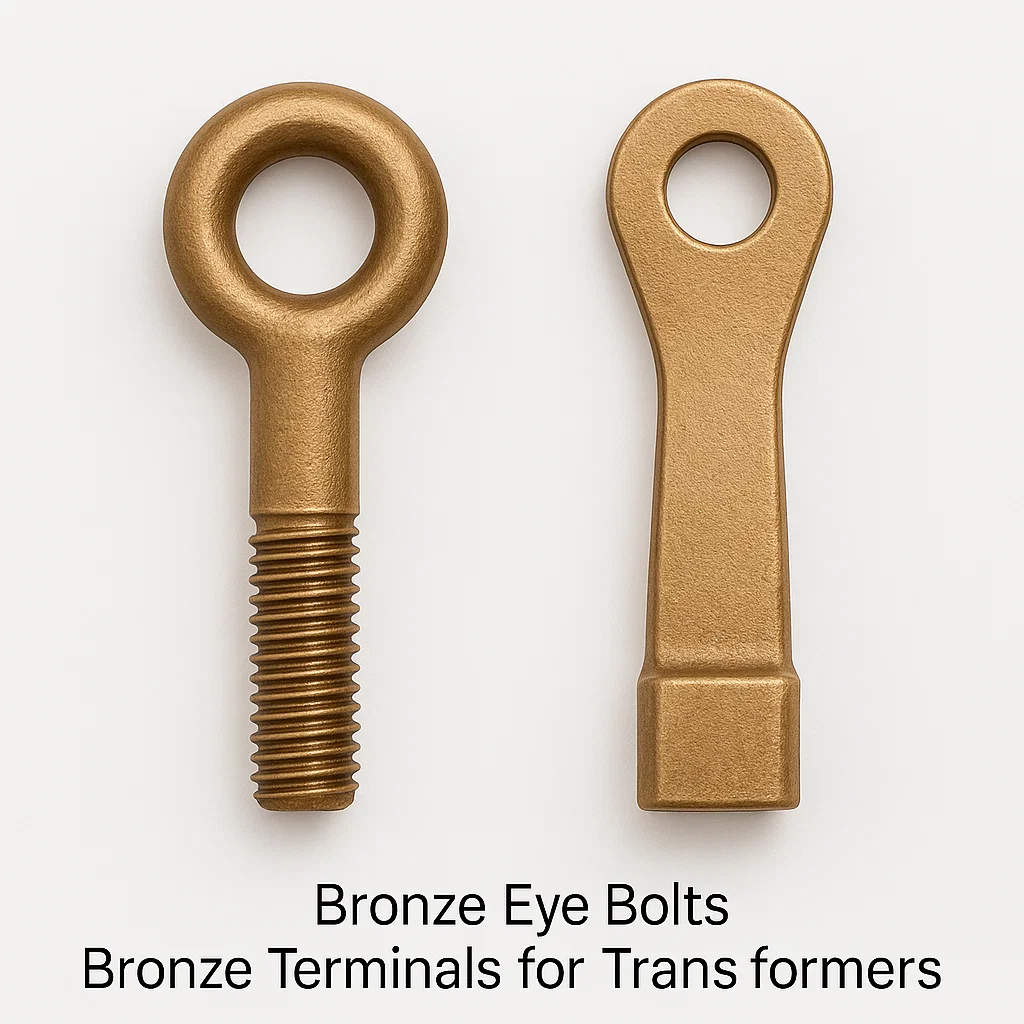


We are one of the leading manufacturers and exporters of Aluminum Machined Parts, CNC Aluminum Machined Parts, Aluminum Turned Components, Aluminum Milled Parts, and Aluminum Precision Components from India. We have been supplying high-quality Aluminum precision machined parts to the world market for many decades. Our state-of-the-art manufacturing facility is equipped with advanced CNC machining centers, precision turning machines, multi-axis milling equipment, and automated Swiss-type screw machines that enable us to produce complex Aluminum components with exceptional accuracy and repeatability. With over three decades of global manufacturing experience, we have established ourselves as a trusted partner for industries requiring precision Aluminum machined parts including aerospace, defense, automotive, medical devices, telecommunications, electrical equipment, instrumentation, oil and gas, semiconductor manufacturing, and industrial automation sectors. Our engineering team comprises highly skilled machinists, quality control specialists, and technical experts who work collaboratively with customers to optimize designs for manufacturability, reduce production costs, and ensure components meet or exceed stringent international quality standards including ISO 9001:2015, AS9100D for aerospace applications, and IATF 16949 for automotive components. We specialize in both high-volume production runs and low-volume prototype machining with flexibility to accommodate rush orders, just-in-time delivery requirements, and custom packaging solutions with customer logos and branding.
We have been manufacturing and exporting Aluminum Machined parts, CNC Aluminum Machined parts, Aluminum Turned Component, Aluminum Screw machine parts, Aluminum Milled parts, Aluminum precision CNC machining , Aluminum Milled parts and components, Aluminum Turned parts fo last 30 years.
Comprehensive Overview of Aluminum Machined Parts and CNC Manufacturing Capabilities
Aluminum Machined Parts represent a critical category of precision-engineered components manufactured through various subtractive manufacturing processes including CNC turning, CNC milling, Swiss-type screw machining, multi-axis machining, EDM (Electrical Discharge Machining), and precision grinding operations. Aluminum, being a lightweight yet durable non-ferrous metal with excellent machinability characteristics, thermal conductivity properties, corrosion resistance, and favorable strength-to-weight ratio, has become the material of choice for countless industrial applications across diverse sectors. Our comprehensive Aluminum machining capabilities encompass working with all commercial Aluminum alloy grades, heat-treated Aluminum materials, casting alloys, and wrought Aluminum bar stock to produce complex geometries, tight-tolerance components, and surface-critical parts. The versatility of Aluminum as a machining material allows for rapid material removal rates, extended tool life, superior surface finishes without secondary operations, and the ability to hold extremely tight dimensional tolerances down to ±0.005mm (±0.0002 inches) for critical features. We process Aluminum components ranging from miniature precision parts weighing less than one gram to large structural components weighing several kilograms, with capabilities to machine diameters from 0.5mm to 500mm and lengths up to 1500mm depending on the manufacturing process employed.
CNC Aluminum Machined Parts are produced using Computer Numerical Control technology that provides unparalleled precision, repeatability, and complexity in component manufacturing. Our CNC machining centers include 3-axis vertical machining centers, 4-axis horizontal machining centers, and 5-axis simultaneous machining centers capable of producing intricate Aluminum parts with complex contours, undercuts, pockets, and three-dimensional profiles in a single setup, thereby eliminating multiple handling operations and maintaining superior geometric accuracy. CNC Aluminum machining offers distinct advantages including consistent quality across production batches, reduced human error, capability to produce complex organic shapes, integration with CAD/CAM software for seamless design-to-production workflow, and the ability to implement design changes rapidly through program modifications without expensive tooling changes. Our CNC programming specialists utilize advanced CAM software including Mastercam, PowerMill, and Fusion 360 to generate optimized tool paths that minimize cycle times, reduce tool wear, and maximize material utilization. We employ high-performance cutting tools with specialized coatings, high-pressure coolant delivery systems, and rigid machine tool construction to achieve superior surface finishes (Ra 0.4 to 3.2 micrometers) directly from the machining process, often eliminating the need for secondary finishing operations.
Aluminum Turned Components are cylindrical or rotational parts produced on CNC turning centers and precision lathes where the workpiece rotates while cutting tools remove material to create features such as external diameters, internal bores, threads, grooves, tapers, spherical profiles, and complex contours. Our turning capabilities include conventional CNC lathes with live tooling, Swiss-type CNC turning centers for long, slender parts with excellent straightness and concentricity, and multi-spindle turning machines for high-volume production. Aluminum turning operations excel at producing parts such as shafts, bushings, spacers, pins, fittings, connectors, valve bodies, instrument housings, and cylindrical enclosures with exceptional surface finish and dimensional accuracy. The turning process is particularly economical for axisymmetric components and offers advantages including faster cycle times compared to milling for rotational features, excellent concentricity and perpendicularity, capability to hold tight diameter tolerances of ±0.01mm, and superior surface finishes that often meet functional requirements without additional finishing. Our turning department operates CNC lathes from leading manufacturers including DMG Mori, Mazak, Okuma, and Haas, with bar capacity ranging from 3mm to 200mm diameter and chuck capacity up to 400mm diameter for larger flanged or irregular-shaped components.
Aluminum Screw Machine Parts are precision components manufactured on Swiss-type automatic screw machines and CNC Swiss turning centers, which are specialized machine tools designed to produce small-diameter, high-precision parts with excellent straightness, concentricity, and surface finish. Swiss-type machining is ideal for producing long, slender Aluminum parts (length-to-diameter ratios exceeding 10:1) such as pins, shafts, terminals, connectors, medical device components, and electronic hardware where conventional turning would result in deflection and poor dimensional control. The Swiss machining process supports the workpiece immediately adjacent to the cutting zone using a guide bushing, virtually eliminating deflection and allowing extremely tight tolerances to be maintained even on small-diameter features. Our Swiss-type machining centers are equipped with multiple tool stations, live tooling capabilities, and sub-spindle operations enabling complete part production in a single cycle including turning, milling, drilling, threading, grooving, and parting-off operations. This single-setup capability ensures superior concentricity between features and eliminates secondary operations, reducing overall manufacturing costs and lead times.
Aluminum Milled Parts encompass components manufactured through milling operations where rotating multi-point cutting tools remove material from stationary or indexed workpieces to create features such as flat surfaces, pockets, slots, contours, holes, and complex three-dimensional geometries. Milling is the preferred process for producing Aluminum parts with flat surfaces, square or rectangular configurations, pockets, keyways, and complex sculptured surfaces that cannot be efficiently produced through turning operations. Our milling capabilities include conventional CNC vertical machining centers for general-purpose work, horizontal machining centers with pallet changers for high-volume production, and 5-axis machining centers for complex aerospace and medical components requiring simultaneous multi-axis interpolation. Aluminum’s excellent machinability characteristics make it ideal for high-speed milling operations using carbide or PCD (Polycrystalline Diamond) cutting tools at spindle speeds exceeding 15,000 RPM, resulting in rapid material removal rates and outstanding surface finishes. We regularly produce Aluminum milled components including enclosures, mounting plates, brackets, manifolds, heat sinks, valve bodies, instrument panels, and complex structural parts for industries ranging from electronics to aerospace.
Aluminum Precision CNC Machining represents our core competency in producing high-accuracy components meeting stringent dimensional, geometric, and surface finish requirements for critical applications. Precision machining typically refers to parts requiring tolerances tighter than ±0.025mm (±0.001 inch), flatness and parallelism within 0.01mm, surface finishes better than 1.6 micrometers Ra, and geometric tolerances conforming to ASME Y14.5 or ISO 1101 standards. Our precision machining processes incorporate temperature-controlled production environments, calibrated measuring equipment traceable to national standards, in-process inspection protocols, and statistical process control methodologies to ensure consistent quality. We utilize high-precision machine tools with thermal compensation, anti-vibration foundations, and linear scale feedback systems providing positioning accuracy to ±0.002mm. Precision Aluminum machining finds applications in aerospace structures, medical implants and surgical instruments, optical mounting systems, metrology equipment, semiconductor manufacturing tooling, and high-performance automotive components where dimensional accuracy directly impacts function, assembly, and performance.
Aluminum Milled Parts and Components produced in our facility serve diverse industrial sectors requiring Aluminum’s unique combination of properties including lightweight construction (density 2.7 g/cm³ compared to steel’s 7.8 g/cm³), excellent corrosion resistance particularly in marine and chemical environments, superior thermal conductivity for heat dissipation applications, electrical conductivity for electronic enclosures and bus bars, non-magnetic properties for instrumentation and electronic applications, and aesthetic appeal with various surface treatments available. Common milled Aluminum components include heat sinks with complex fin geometries for electronic cooling, manifold blocks with intricate internal passages for hydraulic and pneumatic systems, precision enclosures for electronic equipment requiring EMI shielding, mounting brackets and structural components for aerospace and automotive applications, and complex mold components for plastics and die-casting industries. Our milling department utilizes cutting-edge tooling strategies including high-efficiency milling, trochoidal tool paths, and dynamic milling techniques that reduce cycle times by 30-50% compared to conventional milling approaches while extending tool life and improving surface quality.
Aluminum Turned Parts manufactured in our turning department encompass a wide range of cylindrical and rotationally symmetric components serving mechanical, electrical, and structural functions across industries. Typical turned Aluminum parts include precision shafts and spindles for motion control systems, bushings and bearings housings requiring precise bore diameters and surface finishes, spacers and standoffs for electronic assemblies, threaded connectors and fittings for pneumatic and hydraulic systems, valve bodies and actuator components, instrument housings and enclosures with tight diameter tolerances, coupling components for mechanical power transmission, and decorative knobs and handles requiring aesthetic surface treatments. Our turning operations leverage Aluminum’s excellent machinability to achieve very high surface finish quality (often 0.8 micrometers Ra or better) directly from the turning process without secondary polishing or lapping operations. We routinely hold diameter tolerances of ±0.01mm on critical features, concentricity within 0.02mm TIR, and perpendicularity of end faces within 0.015mm across the diameter. Thread forms including metric (ISO), unified (UN/UNC/UNF), British standard (BSW/BSF), pipe threads (NPT/BSPT), and custom forms are produced to class 2A or better accuracy using form tools, thread mills, or single-point threading operations depending on thread specifications and production volume.
Aluminum Alloy Material Grades and International Specifications
Our machining capabilities encompass the complete range of wrought and cast Aluminum alloys used in industrial applications. We maintain inventory of commonly specified grades and can procure specialized alloys for specific customer requirements.
| Aluminum Grade | International Equivalents | Key Properties | Typical Applications |
|---|---|---|---|
| 6061-T6 Aluminum | AlMg1SiCu (EN), A96061 (ASTM), H20 (JIS), LG61 (China) | Excellent machinability, good strength, corrosion resistant, weldable | Structural components, marine fittings, automotive parts, aerospace structures |
| 6082-T6 Aluminum | AlSi1MgMn (EN), H30 (JIS), LD31 (China) | Higher strength than 6061, excellent corrosion resistance, good formability | Bridge components, crane structures, transport applications |
| 7075-T6 Aluminum | AlZn5.5MgCu (EN), A97075 (ASTM), A7075 (JIS), LC4 (China) | Very high strength, excellent fatigue resistance, aerospace grade | Aircraft structures, aerospace fittings, high-stress components, defense applications |
| 2024-T3 Aluminum | AlCu4Mg1 (EN), A92024 (ASTM), A2024 (JIS), LY12 (China) | High strength, excellent fatigue properties, good machinability | Aircraft fuselage, aerospace structures, military applications |
| 5083-H111 Aluminum | AlMg4.5Mn0.7 (EN), A95083 (ASTM), A5083 (JIS), LF21 (China) | Excellent corrosion resistance, good weldability, marine grade | Marine applications, shipbuilding, pressure vessels, cryogenic tanks |
| 2011-T3 Aluminum | AlCu6BiPb (EN), A92011 (ASTM), Free-cutting alloy | Best machinability, free-machining alloy with Bi and Pb additions | Screw machine parts, high-volume production, complex turned components |
| 6063-T5 Aluminum | AlMg0.7Si (EN), A96063 (ASTM), H18 (JIS), LD30 (China) | Excellent extrudability, good surface finish, moderate strength | Architectural extrusions, enclosures, trim, decorative components |
| 7050-T7451 Aluminum | AlZn6CuMgZr (EN), A97050 (ASTM), Aerospace alloy | Very high strength, excellent stress corrosion resistance, aerospace certified | Aerospace structural components, thick-section aircraft parts |
| 2014-T6 Aluminum | AlCu4SiMg (EN), A92014 (ASTM), A2014 (JIS), LY11 (China) | High strength, good machinability, heat treatable | Heavy-duty forgings, aircraft fittings, truck wheels, structural members |
| 5052-H32 Aluminum | AlMg2.5 (EN), A95052 (ASTM), A5052 (JIS), LF2 (China) | Good corrosion resistance, good workability, weldable | Sheet metal work, marine components, fuel tanks, hydraulic tubes |
Manufacturing Processes and Advanced Machining Technologies
Our comprehensive manufacturing capabilities incorporate multiple precision machining processes, each optimized for specific component geometries, production volumes, and quality requirements. CNC Turning Operations utilize computer-controlled lathes ranging from 2-axis to 12-axis multi-tasking machines capable of complete part production in single setup. We employ turning strategies including roughing, finishing, grooving, threading, boring, drilling, and parting operations with cutting speeds optimized for specific Aluminum alloys. CNC Milling Operations encompass 3-axis vertical machining centers for general components, 4-axis horizontal machining centers with tombstone fixtures for batch production, and 5-axis simultaneous machining centers for complex aerospace components requiring multi-face machining without repositioning. Swiss-Type Screw Machining produces high-precision small diameter parts with excellent concentricity using guide bushing support and multi-axis tool configurations. EDM (Electrical Discharge Machining) capabilities include wire EDM for intricate profiles and sharp internal corners, and sinker EDM for complex cavity geometries in hardened Aluminum alloys. Precision Grinding Operations provide final dimensional accuracy and surface finish for critical components including cylindrical grinding, surface grinding, and jig grinding for extreme precision requirements. Secondary Operations available include deburring (tumble finishing, abrasive blasting, hand deburring), thread forming (tapping, thread milling, thread rolling), heat treatment services (solution treatment, artificial aging, stress relieving), and assembly operations including pressing bearings, installing inserts, and sub-assembly integration.
| Manufacturing Process | Machinery Used | Typical Tolerances | Surface Finish Achievable |
|---|---|---|---|
| CNC Turning | DMG Mori NLX Series, Mazak Quick Turn, Okuma LB Series, Haas ST Series | ±0.010mm to ±0.025mm | 0.8 to 1.6 μm Ra |
| CNC Milling (3-Axis) | Haas VF Series, Mazak VTC Series, DMG Mori CMX V Series | ±0.025mm to ±0.050mm | 1.6 to 3.2 μm Ra |
| 5-Axis Machining | DMG Mori DMU Series, Mazak Variaxis, Hermle C Series | ±0.015mm to ±0.030mm | 0.8 to 1.6 μm Ra |
| Swiss-Type Turning | Citizen Cincom, Tsugami B038, Star SR Series | ±0.005mm to ±0.015mm | 0.4 to 0.8 μm Ra |
| Precision Grinding | Studer S Series, Jones & Shipman, Mitsui Surface Grinder | ±0.002mm to ±0.005mm | 0.2 to 0.4 μm Ra |
| Wire EDM | Mitsubishi MV Series, Makino U Series, Sodick VL Series | ±0.003mm to ±0.008mm | 0.4 to 1.0 μm Ra |
Typical Aluminum Machined and Milled Parts for Industrial and Electrical Applications
Our manufacturing portfolio encompasses an extensive range of Aluminum precision components serving mechanical, electrical, electronic, hydraulic, pneumatic, and structural applications across diverse industrial sectors.
Electrical and Electronic Components: Terminal blocks and connection housings, electrical bus bars and conductor blocks, EMI/RFI shielding enclosures, heat sink assemblies with complex fin geometries, electronic equipment chassis and panels, instrument housings for measurement devices, cable glands and strain relief fittings, junction boxes for industrial wiring, switch gear mounting plates, transformer mounting brackets, power distribution manifolds, LED lighting heat sinks, circuit breaker housings, electrical conduit fittings, grounding blocks and terminals, cable lugs and connectors, motor terminal boxes, sensor mounting brackets, control panel enclosures, electrical plug housings.
Mechanical and Industrial Components: Precision shafts and axles for motion control, bearing housings and retention caps, coupling halves and adapters, spacers and standoffs, mounting brackets and support fixtures, machine tool components, precision gears (milled or hobbed), pulley wheels and timing belt components, valve bodies and actuator housings, manifold blocks with internal passages, pneumatic and hydraulic fittings, cylinder barrels and end caps, piston rods and guide bushings, linear bearing rails and carriages, ball screw nuts and mounting blocks, robot arm components, automation equipment parts, conveyor system components, packaging machine parts, pump housings and impellers.
Aerospace and Defense Components: Aircraft structural fittings and brackets, landing gear components, actuator housings and mounting blocks, hydraulic system manifolds, fuel system components, avionics mounting plates, interior trim and seat components, wing rib sections, fuselage frames and stringers, missile guidance system housings, communication equipment enclosures, radar mounting brackets, optical system housings, precision telescope components.
Automotive and Transportation Components: Engine mounting brackets, transmission housing components, suspension system parts, fuel rail assemblies, intake manifold components, throttle body housings, sensor mounting brackets, brake system components, steering column parts, wheel spacers and adapters, electric vehicle battery enclosures, charging system components, cooling system fittings.
Medical and Laboratory Equipment: Surgical instrument components, prosthetic device parts, diagnostic equipment housings, laboratory automation components, fluid handling manifolds, precision syringe components, dental equipment parts, imaging system mounts, medical device enclosures, sterilization equipment components.
Instrumentation and Metrology: Precision gage blocks and standards, optical bench components, microscope stages and mounts, measurement probe housings, calibration fixtures, test equipment enclosures, sensor mounting blocks, fixture plates and tooling bases, coordinate measuring machine components.
Surface Finishing and Plating Options for Aluminum Components
Surface finishing plays a critical role in enhancing the performance, aesthetics, and longevity of Aluminum machined parts. Our comprehensive finishing capabilities include both decorative and functional treatments conforming to international standards including ASTM B580, MIL-A-8625, AMS 2469, ISO 7599, and BS 1615.
| Finish Type | Process Description | Typical Thickness | Key Benefits | Standards |
|---|---|---|---|---|
| Clear Anodizing | Electrochemical oxidation creating protective oxide layer | 5-25 microns | Excellent corrosion resistance, hard surface, maintains Aluminum appearance | MIL-A-8625 Type II, ASTM B580 |
| Hard Anodizing | Thick anodic coating for wear resistance applications | 25-100 microns | Extreme hardness (400-600 HV), excellent wear resistance, corrosion protection | MIL-A-8625 Type III, AMS 2469 |
| Color Anodizing | Anodizing with dye incorporation for aesthetic finish | 10-25 microns | Decorative appearance, corrosion resistant, available in various colors | ASTM B580, ISO 7599 |
| Chromate Conversion (Alodine) | Chemical conversion coating forming thin chromate layer | 0.5-2.5 microns | Excellent paint adhesion base, electrical conductivity, corrosion protection | MIL-DTL-5541, ASTM B449 |
| Powder Coating | Electrostatic application of polymer powder with thermal curing | 50-100 microns | Excellent durability, wide color range, chemical resistance, aesthetic finish | ASTM D3363, ISO 2409 |
| Electroless Nickel | Autocatalytic nickel-phosphorus deposition | 5-25 microns | Uniform thickness, excellent corrosion resistance, hard surface, solderable | ASTM B733, AMS 2404 |
| Passivation | Chemical treatment removing free iron and enhancing oxide layer | < 0.1 micron | Improved corrosion resistance, clean surface, maintains dimensions | ASTM B912, AMS 2700 |
| Bead Blasting | Abrasive media blasting for uniform matte appearance | Surface texture | Uniform matte finish, stress relief, cleaning, decorative appearance | SAE AMS-S-13165 |
| Electropolishing | Electrochemical material removal for smooth, bright surface | 5-15 microns removed | Bright mirror finish, burr removal, enhanced corrosion resistance, clean surface | ASTM B912, AMS 2700 |
| Zinc Nickel Plating | Electroplated zinc-nickel alloy coating on Aluminum | 5-12 microns | Superior corrosion resistance, automotive applications, RoHS compliant | ASTM B841, LN9021 |
Quality Standards, Tolerances, and Inspection Capabilities
Quality assurance forms the foundation of our manufacturing philosophy. Our quality management system is certified to ISO 9001:2015 with additional approvals for AS9100D (aerospace quality management), IATF 16949 (automotive quality), and ISO 13485 (medical devices) ensuring comprehensive quality control throughout the manufacturing process. Our climate-controlled inspection department maintains ambient temperature of 20°C ±1°C conforming to ISO 1 standards for dimensional measurement. Inspection Equipment includes Mitutoyo Coordinate Measuring Machines (CMM) with measuring volume up to 1000 x 1200 x 800mm and accuracy to 2.5 + L/300 microns, Keyence optical comparators and profile projectors for 2D geometry verification, Mitutoyo micrometers and height gages with 0.001mm resolution, surface roughness testers (Mitutoyo Surftest), hardness testers (Rockwell, Brinell, Vickers), and optical microscopes for surface defect analysis. Dimensional Tolerance Capabilities routinely achieved include linear dimensions ±0.010mm to ±0.025mm for standard machining, ±0.005mm to ±0.010mm for precision Swiss machining, ±0.002mm to ±0.005mm for ground components, diameter tolerances of ±0.008mm to ±0.015mm, hole position tolerances within ±0.015mm, flatness and parallelism within 0.010mm across 100mm, perpendicularity within 0.015mm, concentricity within 0.020mm TIR, and surface finish routinely maintained between 0.8 to 3.2 micrometers Ra depending on process. Geometric Dimensioning and Tolerancing (GD&T) per ASME Y14.5-2018 and ISO 1101:2017 standards are fully supported including position, profile, runout, and form tolerances. All critical dimensions are inspected and documented with first article inspection reports (FAIR) conforming to AS9102 or similar standards, certificate of conformance (CoC), material test certificates (MTC) with full traceability to mill certificates, and dimensional inspection reports with actual measurements.
| Feature Type | Standard Tolerance | Precision Tolerance | Inspection Method |
|---|---|---|---|
| External Diameters (Turned) | ±0.025mm | ±0.008mm | CMM, Micrometer, Air Gaging |
| Internal Diameters (Bored) | ±0.030mm | ±0.010mm | CMM, Bore Gage, Air Gaging |
| Linear Dimensions (Milled) | ±0.050mm | ±0.015mm | CMM, Vernier Caliper, Height Gage |
| Hole Position | ±0.050mm | ±0.015mm | CMM, Optical Comparator |
| Flatness | 0.030mm per 100mm | 0.010mm per 100mm | CMM, Surface Plate, Dial Indicator |
| Parallelism | 0.030mm | 0.010mm | CMM, Parallel Bars |
| Perpendicularity | 0.040mm | 0.015mm | CMM, Cylindrical Square |
| Concentricity / Runout | 0.050mm TIR | 0.020mm TIR | CMM, Dial Indicator on V-Block |
| Thread Accuracy | Class 2B / 6H | Class 3B / 5H | Thread Gages, CMM, Optical Comparator |
| Surface Roughness | 1.6 to 3.2 μm Ra | 0.4 to 0.8 μm Ra | Surftest Profilometer |
Production Capacity, Lead Time, and Turnaround
Our manufacturing facility operates with flexible production scheduling to accommodate varying customer requirements from prototype quantities to high-volume production runs. Typical Production Lead Time for standard Aluminum machined components ranges from 4 to 6 weeks from purchase order receipt to shipment, depending on part complexity, material availability, surface finish requirements, and inspection specifications. Expedited Production Services are available for urgent requirements with accelerated turnaround of 2 to 3 weeks for standard components and 7 to 10 working days for simple turned or milled parts where material is readily available in stock. Prototype Machining Services provide rapid turnaround of sample parts typically within 5 to 7 working days for design verification, functional testing, and pre-production evaluation. Production Capacity accommodates batch sizes from single prototype pieces to production runs exceeding 100,000 pieces annually per component, with capability to scale production based on demand forecasts. Our manufacturing planning system utilizes MRP II software for material procurement, capacity planning, and delivery scheduling ensuring on-time delivery performance exceeding 95%. We maintain safety stock of commonly used Aluminum alloys including 6061-T6, 7075-T6, 2024-T3, and 2011-T3 in various diameter bar stock from 3mm to 200mm enabling faster production start without material procurement delays. Just-In-Time (JIT) Delivery arrangements can be established for repeat production orders with blanket purchase orders, scheduled releases, and Kanban-based replenishment ensuring optimal inventory management for customers. Rush Order Services with premium scheduling are available for critical requirements with guaranteed delivery commitments and daily progress updates throughout production.
Industries and Applications Served Worldwide
Our Aluminum precision machined components serve critical applications across numerous industrial sectors globally. Aerospace and Aviation Industry applications include aircraft structural components, landing gear parts, avionics mounting systems, actuator housings, fuel system components, and interior cabin fittings conforming to AS9100D quality standards and NADCAP approvals. Defense and Military Sector encompasses weapon system components, communication equipment housings, vehicle armor mounting systems, optical and sensor housings, and electronic warfare equipment meeting MIL-SPEC requirements. Automotive Industry includes engine components, transmission parts, suspension systems, brake assemblies, electric vehicle battery enclosures, and charging infrastructure components certified to IATF 16949 standards. Medical Device Manufacturing serves surgical instruments, diagnostic equipment, prosthetic components, laboratory automation systems, and imaging equipment housings conforming to ISO 13485 and FDA requirements. Electronics and Telecommunications sectors utilize our heat sinks, EMI/RFI shielding enclosures, equipment chassis, antenna mounting systems, and connector housings. Industrial Automation and Robotics applications include precision actuators, servo motor housings, sensor mounts, machine vision system components, and end-effector tooling. Oil and Gas Industry encompasses valve components, manifold blocks, pressure vessel fittings, instrumentation housings, and offshore equipment parts meeting NACE corrosion resistance standards. Renewable Energy Sector includes solar panel mounting systems, wind turbine components, energy storage system enclosures, and power distribution equipment. Marine and Shipbuilding applications utilize our corrosion-resistant Aluminum components for deck fittings, navigation equipment housings, propulsion system parts, and structural components conforming to Lloyd’s Register and ABS specifications. Instrumentation and Metrology sectors depend on our precision components for measurement equipment, calibration standards, optical benches, and laboratory automation systems requiring exceptional dimensional accuracy and stability.
Material Properties and Technical Specifications
| Property | 6061-T6 | 7075-T6 | 2024-T3 | 5083-H111 | Test Method |
|---|---|---|---|---|---|
| Density (g/cm³) | 2.70 | 2.81 | 2.78 | 2.66 | ASTM B311 |
| Tensile Strength (MPa) | 310 | 570 | 470 | 290 | ASTM E8 |
| Yield Strength (MPa) | 275 | 505 | 325 | 145 | ASTM E8 |
| Elongation (%) | 12-17 | 11 | 18 | 16 | ASTM E8 |
| Hardness (Brinell HB) | 95 | 150 | 120 | 85 | ASTM E10 |
| Modulus of Elasticity (GPa) | 68.9 | 71.7 | 73.1 | 70.3 | ASTM E111 |
| Thermal Conductivity (W/m·K) | 167 | 130 | 121 | 117 | ASTM E1461 |
| Coefficient of Thermal Expansion (µm/m·K) | 23.6 | 23.4 | 22.9 | 23.8 | ASTM E228 |
| Electrical Conductivity (% IACS) | 43 | 33 | 30 | 29 | ASTM B193 |
| Melting Point (°C) | 582-652 | 477-635 | 502-638 | 570-638 | ASTM E794 |
Why Choose Our Aluminum Machining Services – Competitive Advantages and Unique Selling Propositions
Three Decades of Global Manufacturing Excellence positions us as a trusted partner with extensive experience serving customers across North America, Europe, Asia-Pacific, and Middle East markets. Our engineering team has accumulated deep domain expertise across aerospace, automotive, medical, defense, and industrial sectors enabling us to provide valuable design-for-manufacturability insights that optimize part geometry, reduce manufacturing costs, and improve product performance. Advanced Manufacturing Technology Investment ensures we maintain cutting-edge capabilities with recent capital investments exceeding $3 million USD in state-of-the-art CNC machining centers, Swiss-type turning machines, 5-axis simultaneous machining equipment, and automated inspection systems providing technological advantages in precision, efficiency, and quality consistency. Engineering Support and Technical Consultation differentiates our service with dedicated application engineers who collaborate with customers from initial concept through production, offering design optimization recommendations, material selection guidance, manufacturing process consultation, and tolerance analysis using finite element analysis (FEA) and computational fluid dynamics (CFD) tools when applicable.
Flexibility and Customization Capabilities accommodate unique customer requirements including custom material sourcing, specialized heat treatment processes, proprietary surface finishes, complex assembly operations, and integrated testing services eliminating the need for multiple suppliers and reducing overall project timelines. Responsive Communication and Project Management provide customers with dedicated account managers, weekly production status updates, online order tracking portals, and 24-hour email response commitment ensuring transparency throughout the manufacturing cycle. Our multilingual team provides technical support in English, German, French, Spanish, Japanese, and Mandarin facilitating seamless communication with international customers. Quality Certifications and Compliance demonstrate our commitment to excellence with ISO 9001:2015, AS9100D aerospace quality management, IATF 16949 automotive quality system, ISO 13485 medical device quality management, and RoHS/REACH compliance for European markets ensuring our manufacturing processes meet the most stringent industry standards.